
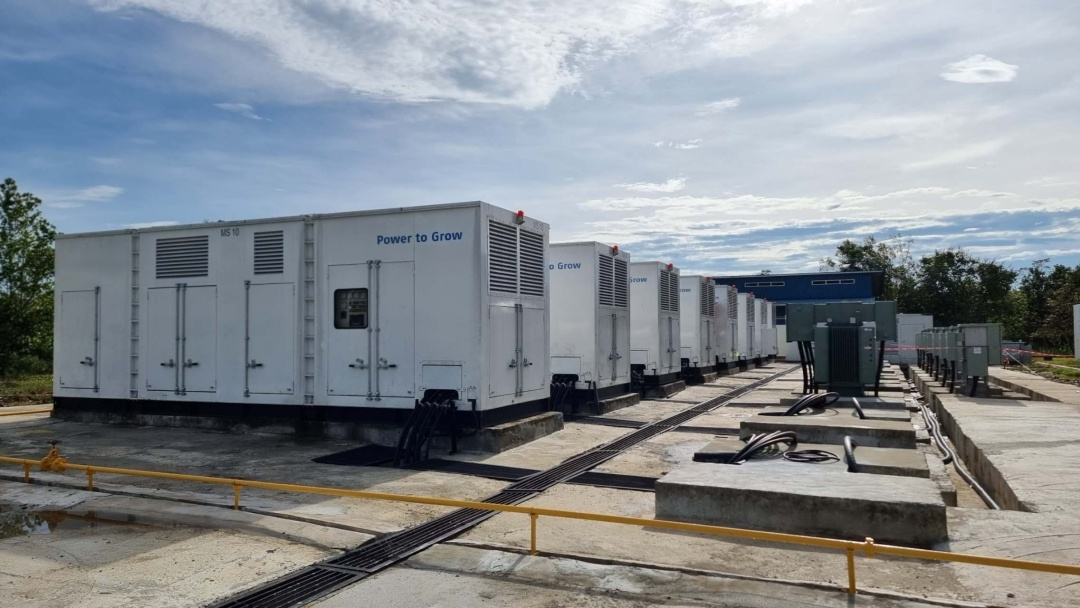
In modern mining sites, processing plants, remote industrial zones, and large construction projects, the use of multiple small and medium generator sets running in parallel has become a preferred power solution. Compared with a single large-capacity generator, a parallel system offers clear advantages in cost control, efficiency, reliability, and long-term scalability. These benefits align with today’s engineering principles of modularity, flexibility, and operational resilience.
This article provides a clear, technical, and science-based explanation of how parallel generator systems work and why they are becoming the standard power configuration for demanding industrial applications.
⚡ 1. Lower Total Cost of Ownership (CAPEX + OPEX)
More economical initial investment
For the same total power output, purchasing several smaller generators is usually more affordable than buying one ultra-large generator. Manufacturing costs of large-capacity engines are significantly higher due to more complex machining and specialized components. In contrast, small and medium-sized generators are mass-produced using standardized platforms, reducing cost.
In many cases, a parallel configuration can reduce initial investment by 15–25%, depending on the brand and configuration.
Reduced fuel and maintenance costs
Parallel systems operate based on real-time load demand.
- At low loads, extra generators automatically shut down to avoid fuel waste.
- Online generators operate closer to their optimal efficiency band, reducing fuel consumption.
- Spare parts for small generator models are easier to source and more affordable.
This combination results in significantly lower operational and maintenance costs over the equipment’s lifetime.
⚙ 2. Intelligent Operation and Higher System Efficiency
Modern parallel control systems—including synchronizers, power management modules, and CAN-based communication—enable remarkable performance and reliability.
Automatic start/stop for on-demand power
When power demand drops, the system automatically unloads and stops unnecessary generators.
When demand increases, standby units automatically start, synchronize, and connect to the bus.
This eliminates the “oversized generator running at low load” problem common in traditional setups.
Precise load sharing
Advanced controllers keep load-sharing deviation within ±5%, ensuring:
- Stable frequency and voltage
- Balanced power distribution
- Reduced risk of overload or early wear
- Improved long-term reliability
Higher supply reliability with natural redundancy
Unlike a single large generator—where a failure means total blackout—parallel systems allow N+1 or N+2 redundancy.
If one generator fails, others remain online, maintaining uninterrupted power supply.
🔧 3. Flexible Expansion for Long-Term Mine or Plant Development
Mining operations evolve over time—stripping phases, ramp-ups, expansions, and new processing lines. Power demand changes accordingly.
Parallel systems offer unmatched flexibility:
- Initial investment matches current demand without over-building capacity.
- Future expansion is simple—add new generators and integrate them into the existing system via a parallel cabinet.
- No major redesign of the existing power infrastructure is required.
This modular approach protects early investment and allows the power system to grow at the same pace as the project.

✔ Conclusion
Parallel generator systems represent a modern, scalable, and cost-efficient approach to industrial power supply—especially for mining environments where reliability, adaptability, and operational efficiency are critical.
Key advantages include:
- 15–25% lower initial cost
- Significant reduction in fuel and maintenance expenses
- Automatic power optimization based on real-time load
- Redundant architecture for uninterrupted operation
- Easy and economical future expansion
As industrial projects demand higher efficiency and flexibility, parallel generator systems have become a proven and forward-looking solution.
If you would like to explore technical details—such as synchronization conditions, controller selection, or mixed-brand paralleling—we are ready to provide further guidance.
Join Our Community, Subscribe for Updates!