
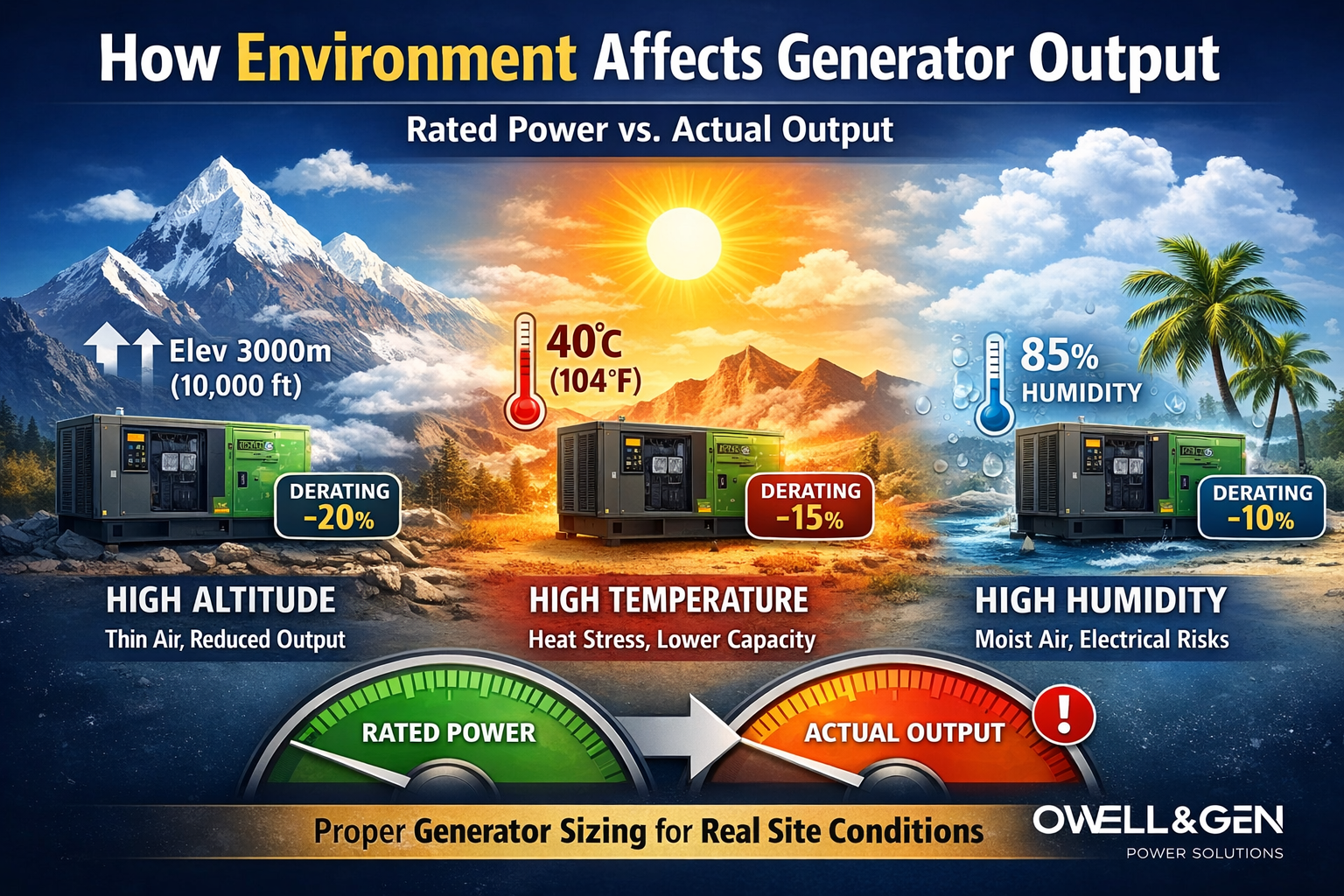
When people select a generator, the first thing they often look at is the rated power. But in real projects, rated power is only part of the story. What matters more is the actual output the generator can deliver at the site.
This is where the industry’s Three High Conditions become important: high altitude, high ambient temperature, and high humidity. These site conditions can change how a generator breathes, burns fuel, and removes heat. As a result, the unit may not deliver the same output it can achieve under standard conditions.
That is why generator derating and generator sizing should never be treated as minor details. They are central to reliable equipment selection.
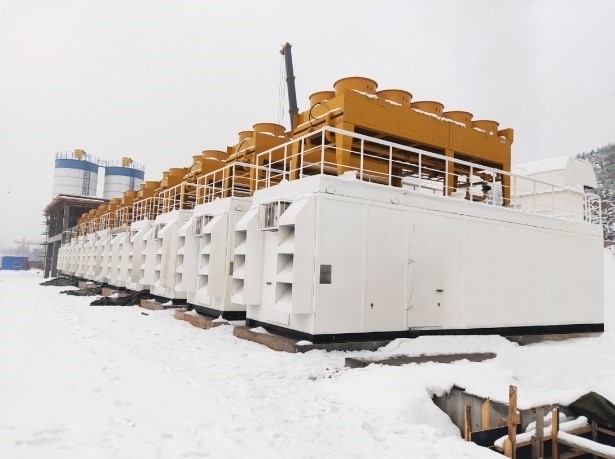
High Altitude: Thinner Air, Lower Output
High altitude is one of the most direct factors affecting generator performance. As elevation rises, air pressure drops and the air becomes thinner. That means less oxygen enters the engine during each intake cycle.
For both diesel and gas generators, less oxygen means weaker combustion support. The engine may still run normally, but it cannot always maintain the same output as it would at sea level. Cooling performance is also affected, which further reduces the operating margin of the genset.
This is why a generator that looks correctly sized on paper may still fall short in high-altitude applications.
High Ambient Temperature: More Heat, Less Margin
High ambient temperature puts the generator under a different kind of pressure. Hot air is less dense, so the engine again receives less oxygen. At the same time, the cooling system has a harder job, because it becomes more difficult to remove heat from the engine and alternator.
In simple terms, the generator has less room to work safely at full load. It may continue operating, but the available output can drop when the site temperature rises beyond standard reference conditions.
This is one of the key reasons proper generator sizing must consider the real climate, not just the load demand.
High Humidity: Not the Strongest Factor, But Still Important
Compared with altitude and temperature, humidity usually has a smaller direct effect on output. Even so, it should not be ignored.
Moist air slightly reduces the oxygen available for combustion, which can add pressure under already demanding conditions. More importantly, high humidity can increase the risks of condensation, corrosion, and insulation stress, especially in coastal, tropical, or poorly ventilated installations.
So while humidity may not be the primary cause of derating in every project, it remains an important part of overall site evaluation.
Why Rated Power Is Not the Same as Actual Site Output
This is the point that often gets overlooked.
A generator is typically rated under standard conditions. Real projects are different. Altitude, temperature, humidity, ventilation, and installation layout all influence the machine’s real operating performance. Once those site conditions change, the available output may change as well.
That is why generator derating matters. And that is also why generator sizing should be based on actual operating conditions, not only on catalog data.
The real question is not simply, “What is the rated power?”
It is, “What output can this generator deliver reliably at this site?”

Why This Matters Even More in Gas Generator Projects
In gas power applications, this issue becomes even more important.
Gas generators are often more sensitive to intake conditions and combustion stability than diesel units. If high altitude or high temperature is combined with fluctuating gas pressure, low calorific value, or unstable gas composition, the actual output may drop more sharply than expected.
That is why gas generator selection should consider both the environment and the fuel conditions from the start.
Final Thought
The Three High Conditions are not just background information. They are part of the foundation of generator selection.
A well-chosen generator is not simply a unit that matches the required load on paper. It is a unit that can deliver stable, reliable output under the real conditions of the project site.
At OWELL Generators, the focus is on aligning generator selection with actual operating conditions, so that the equipment is better matched to project demand, site environment, and long-term reliability.
Join Our Community, Subscribe for Updates!