
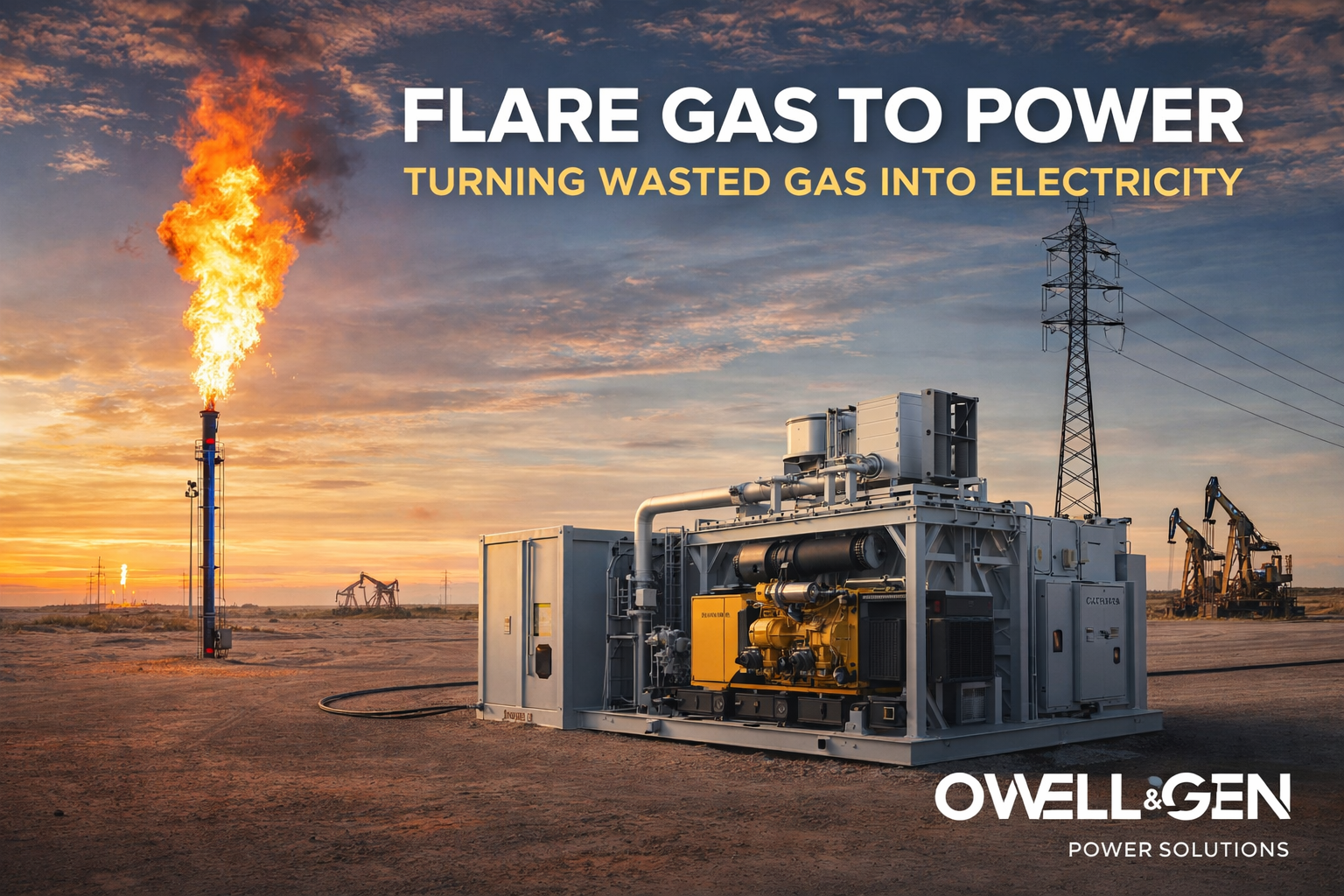
In many oilfields, the contradiction is obvious.
A site may have a constant flare, yet still depend on diesel generation, rental power, or an unstable grid connection. Gas is present. Reliable power is not. That is why flare gas to power and associated gas power generation continue to attract attention across upstream oil and gas operations. But the presence of gas does not automatically make a power project workable. Industry guidance and solution pages point to the same conclusion: project success depends on fuel quality, gas stability, treatment requirements, and system design under real field conditions.
For most projects, the first decision is not generator size.
It is whether the gas can be used as a stable fuel.
1. Can associated gas be used directly for power generation?
In some cases, yes. In many cases, not without preparation.
Associated petroleum gas (APG), often referred to as associated gas or flare gas, can be used for on-site power generation. The challenge is that APG composition varies widely from field to field. Some gas streams can be used with limited conditioning. Others require broader treatment and engine adaptation before they become suitable for reliable operation.
This is where many projects become more technical than they appear at first. Commercially, the site “has gas.” Technically, the project still has to answer a narrower question: is that gas fit for stable engine use?
2. Why do some associated gas power projects run steadily while others keep derating?
Because the engine responds to the fuel it actually receives, not the fuel assumed in a proposal.
Current gas-engine guidance makes clear that performance is shaped by more than gas availability. Gas composition, heating value, methane number, impurities, and the speed at which the gas changes over time all influence combustion behavior, knock limits, load response, and operating stability.
This point is especially important in oilfield projects. A plant may look correctly sized on paper, yet still suffer from unstable loading, recurring alarms, or chronic deration once it is exposed to real field gas. In many cases, the root issue is not the nominal generator rating. It is the changing condition of the fuel entering the system.
Where heating value shifts quickly, the control challenge becomes more demanding. Air-fuel ratio management, ignition stability, and transient response all depend on how well the system can follow those changes in real time. That is why gas to power projects in oilfields often require not only the right engine platform, but also the right control philosophy.
3. Why does methane number matter in associated gas applications?
Because methane content and methane number are not the same thing.
For gas engines, methane number is a measure of knock resistance. Industry guidance describes it as an indicator of resistance to end-gas knock, which means it has a direct effect on tuning margin, engine suitability, and achievable output. A gas stream may show acceptable methane content in a summary report, yet still have a methane number that limits stable engine operation.
This is one of the reasons APG projects are often misunderstood in early discussions. Gas that looks usable in broad terms may still perform poorly under load if its combustion characteristics are unfavorable. For that reason, associated gas power generation should begin with actual fuel analysis rather than nameplate sizing alone.
4. Why do H2S, moisture, liquids, and heavy hydrocarbons matter?
Because raw field gas is not the same as prepared engine fuel.
Oilfield gas streams may contain moisture, corrosive components, entrained liquids, and heavier hydrocarbons. These factors affect combustion quality, equipment protection, maintenance intervals, and long-term reliability. In APG applications, heavier hydrocarbons are not only a fuel-quality concern. They can also create condensation risk in the gas train if conditions allow heavier fractions to drop out before the engine.
H2S deserves particular attention. In wet conditions, sulphur compounds can contribute to acidic corrosion, affecting components, gas handling systems, and lubricant life. This is one reason why many projects cannot move directly from inquiry to quotation. Before a reliable power proposal can be finalized, the engineering discussion often has to move upstream to filtration, drying, liquid separation, pressure control, or a broader gas treatment skid strategy.
That is not unnecessary complexity.
It is part of making the project work in the field, not just in theory.
5. Can flare gas still be used if gas quality changes over time?
In many cases, yes. But then the project has to be designed around variation.
A practical flare gas to power system is not built for one ideal gas sample or one steady operating point. It has to tolerate changing composition, pressure swings, and fluctuating site demand. Case material from field-gas projects shows that stable performance often depends on a broader system approach: treatment, controls, modular deployment, and operating logic tailored to actual oilfield conditions.
This is also where modularity becomes commercially relevant. Associated gas projects rarely develop under perfectly stable conditions. Gas volume may change over time. Load may expand in phases. In some cases, the operating life of a site may not justify a large fixed installation. Skid-mounted and modular design can therefore be important, not only for faster deployment, but also for staged expansion, relocation, and better alignment with field economics.
The question is not whether gas can produce power once.
The question is whether the system can keep producing usable power as the field changes.
6. What data should be prepared before asking for a proposal?
A useful proposal starts with better fuel data, not faster pricing.
In oilfield gas to power projects, the quality of the inquiry often determines the quality of the solution. Gas-engine suitability is assessed against actual fuel and operating conditions, not against a generic assumption.
A serious inquiry should ideally include:
- gas composition analysis
- methane number, if available
- heating value range, if available
- pressure range and stability
- expected flow variation
- H2S, moisture, and liquid content
- ambient temperature and altitude
- required voltage and frequency
- load profile and starting characteristics
- operating mode: prime, continuous, standby, island, or grid-parallel
- installation concept: skid-mounted, containerized, or plant-integrated
These inputs do more than support equipment selection. They help define treatment scope, control requirements, expected deration, and whether the project is technically realistic from the beginning.
7. What makes a flare gas power project commercially meaningful?
Usually, it is a combination of operating and energy gains rather than one headline benefit.
Public solution pages and case studies repeatedly frame the value in practical terms: using gas that would otherwise be flared, reducing diesel dependence, easing fuel logistics, improving site energy use, and supporting power supply in remote or constrained locations.
For many oilfield operators, the strongest economic driver is not abstract sustainability language. It is the operating value of turning an on-site gas stream into useful power while reducing dependence on transported fuel. Where diesel supply is costly or logistically difficult, that can materially change project economics. At the same time, the commercial case only holds when the technical case is sound. If the gas stream is unstable, untreated, or poorly characterized, an attractive concept can become a difficult project during execution.
The better projects are usually the ones that define fuel boundaries early, match the system to real field conditions, and stay realistic about what the gas can support over time.
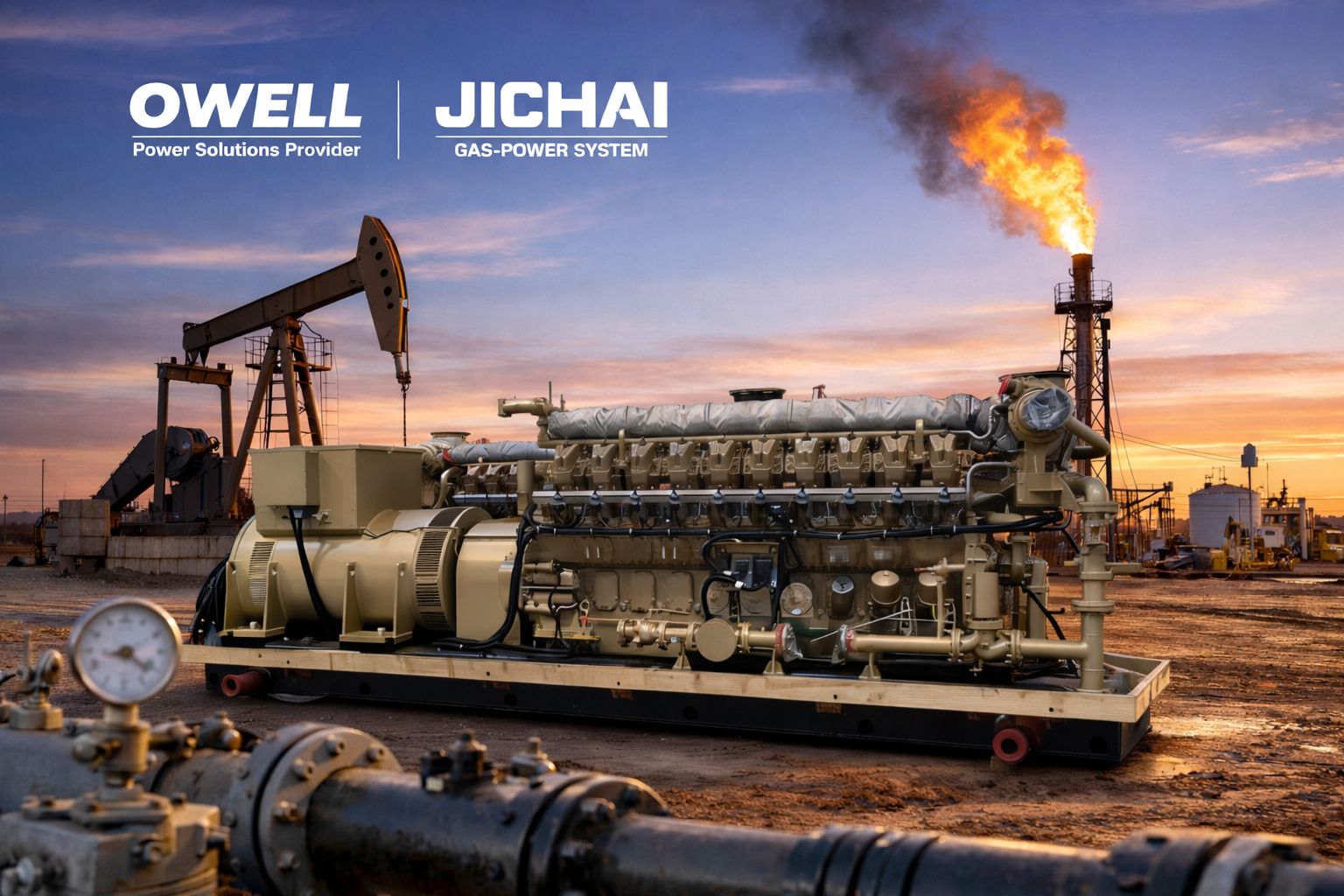
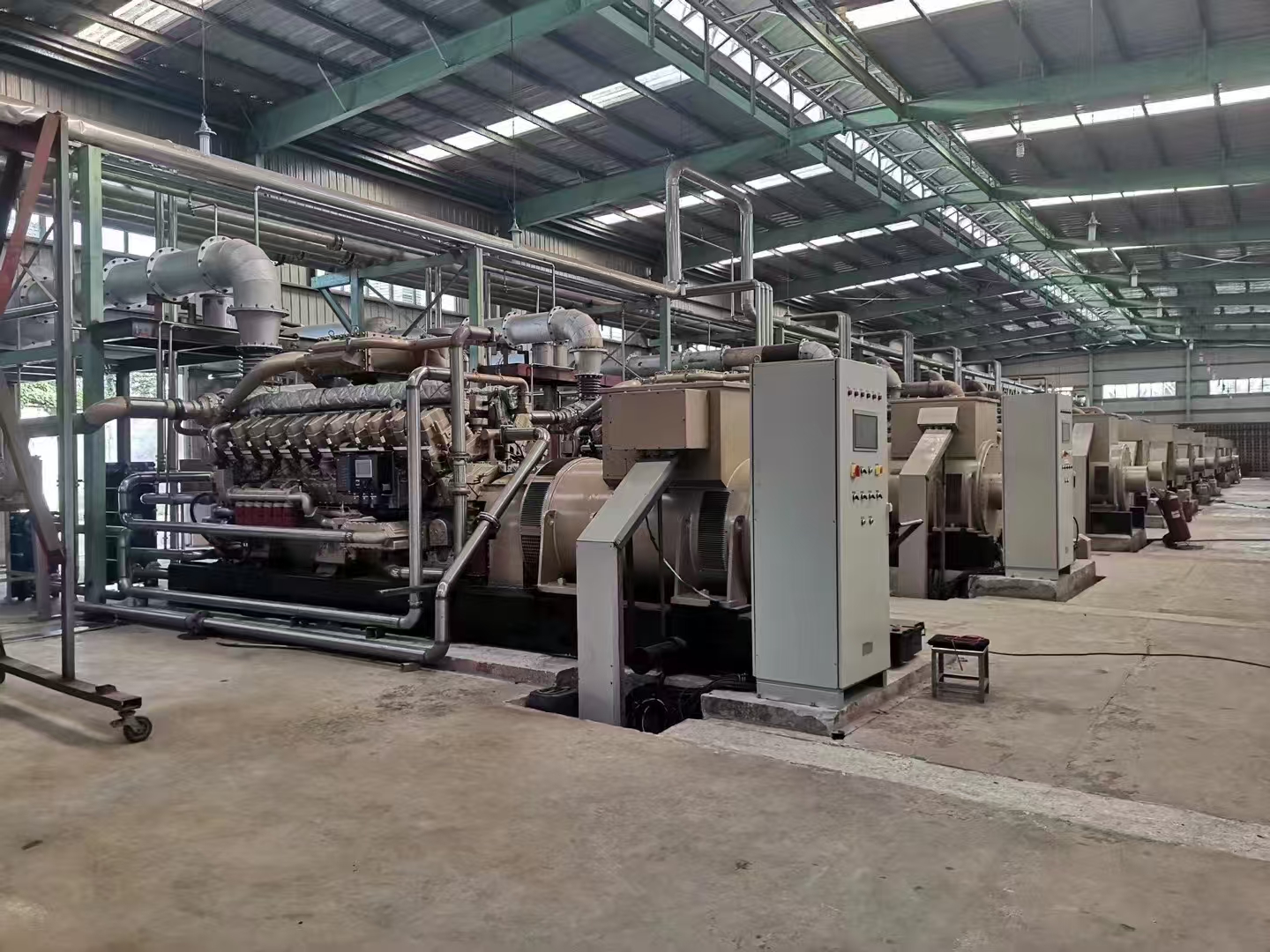
When Field Gas Becomes Real Power
In oilfield operations, flare gas to power is not simply an emissions topic. It is a power-availability question.
Can an oilfield convert its own gas stream into dependable electricity? In many cases, yes. But only when the project is built on real fuel data, realistic treatment strategy, suitable engine selection, and control logic that reflects field conditions rather than assumptions. Associated gas becomes valuable not when it is merely present, but when it can be used consistently as fuel.
At OWELL Generators, the focus is on practical power solutions for demanding industrial applications, including gas-fueled generation for oilfield and remote-site use. The approach starts with feasibility: understanding the gas, clarifying the treatment boundary, and matching the system architecture to actual operating conditions. If a site already has a gas composition report, that is the right place to begin.
Join Our Community, Subscribe for Updates!